How to Start an AI Content Writing Business in 2026 (Step-by-Step Guide)
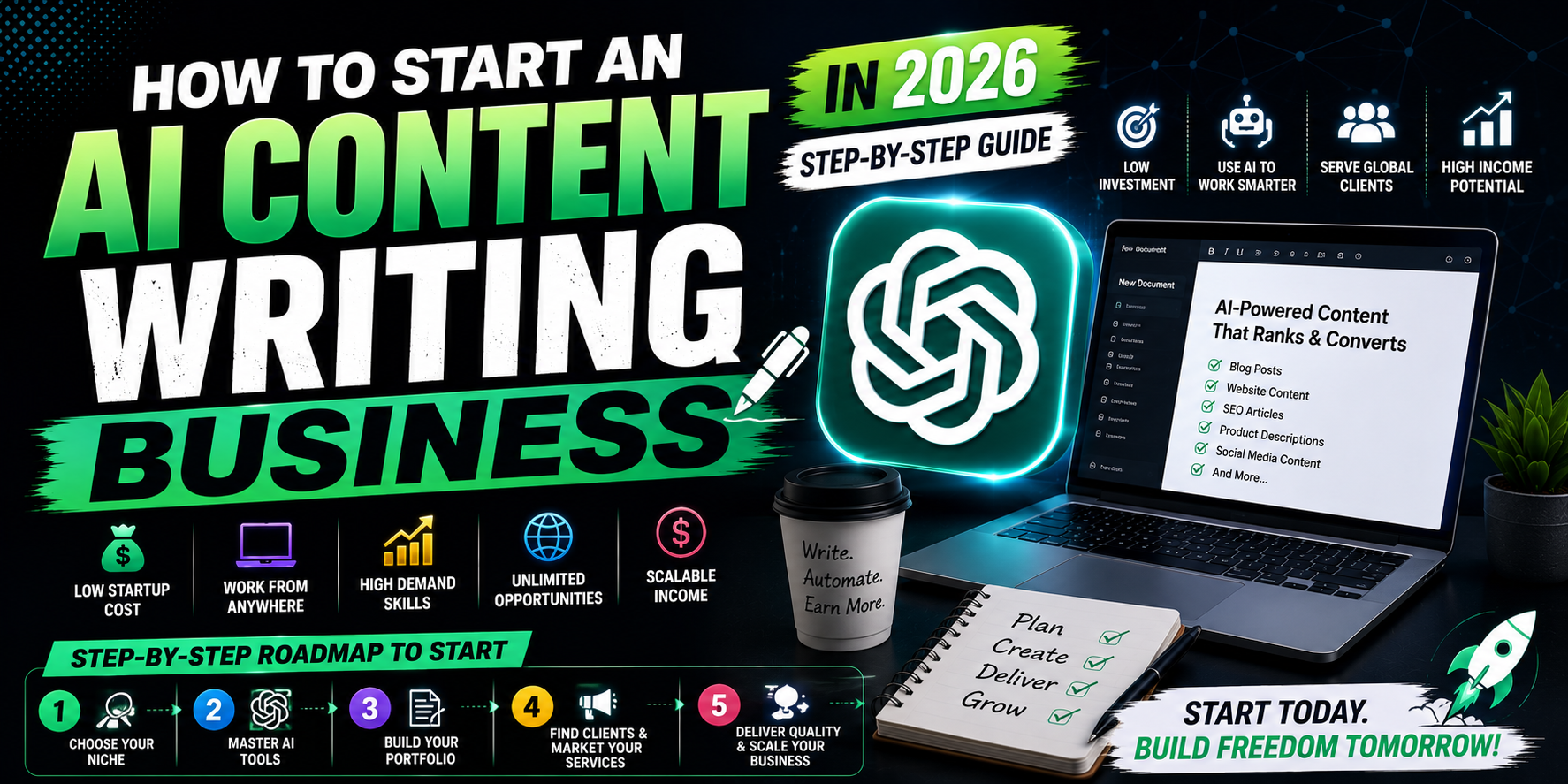
Businesses publish more online content than ever before. They need blog posts, website pages, email campaigns, newsletters, product descriptions, case studies, and social media content to attract customers.
At the same time, AI tools have changed how content is created.
Instead of replacing professional writers, AI has become a productivity tool that helps with research, outlining, brainstorming, editing, and first drafts. Businesses still expect high-quality, original, and accurate content that reflects their brand and serves their audience.
This creates an opportunity for writers who know how to combine AI tools with strong writing, editing, and research skills.
This guide explains how to build an AI-assisted content writing business that focuses on quality, trust, and long-term client relationships.
Quick Answer
An AI content writing business uses AI tools to streamline parts of the writing process—such as brainstorming, outlining, and drafting—while relying on human expertise for research, editing, fact-checking, and strategic decisions. Success comes from delivering useful, accurate, and audience-focused content rather than simply generating text.
Why Businesses Hire Content Writers
Companies don’t publish content just to fill their websites.
They create content to:
- Increase organic search traffic
- Build authority
- Educate customers
- Generate leads
- Improve conversions
- Support sales teams
- Strengthen their brand
A skilled content writer helps businesses achieve these goals through clear, valuable communication.
Can You Build a Business Using AI?
Yes—but AI should enhance your workflow, not define your service.
Clients are paying for:
- Research
- Strategy
- Industry understanding
- SEO knowledge
- Brand voice
- Editing
- Accuracy
- Reliability
AI helps you complete repetitive tasks more efficiently, but it doesn’t replace the responsibility of delivering professional work.
Skills You’ll Need
You don’t need to be an expert on day one, but these skills are important:
- Content writing
- Grammar and editing
- SEO fundamentals
- Keyword research
- Research techniques
- Client communication
- Time management
- Basic marketing
- Critical thinking
Improving these skills over time allows you to charge higher rates and work with better clients.
Essential AI Tools
A practical toolkit may include:
- ChatGPT for brainstorming and drafting
- Claude for long documents and analysis
- Grammarly for editing
- Perplexity for research assistance
- Notion AI for organization
Choose tools based on your workflow rather than subscribing to every AI platform available.
Choose Your Niche
Specializing can make it easier to stand out.
Popular content writing niches include:
- Technology
- SaaS
- Finance
- Healthcare
- Real estate
- E-commerce
- Travel
- Education
- Legal marketing
- Home improvement
Clients often prefer writers who understand their industry and audience.
Create Service Packages
Instead of offering “content writing,” define clear services.
For example:
SEO Blog Package
- Keyword-focused articles
- Meta title
- Meta description
- FAQ suggestions
- Internal linking recommendations
Website Content Package
- Homepage
- About page
- Service pages
- Contact page
- FAQs
Monthly Content Plan
- Eight blog articles
- Content calendar
- Keyword suggestions
- Performance recommendations
Clear packages simplify purchasing decisions and help clients understand what they’re receiving.
Build a Writing Portfolio
A portfolio demonstrates your ability more effectively than a resume.
Include:
- Blog articles
- Website pages
- Case studies
- Landing pages
- Product descriptions
- Email campaigns
If you’re new, create sample projects for industries you’d like to work with. Focus on quality, not quantity.
Create a Professional Website
A simple website builds credibility.
Include pages such as:
- Home
- About
- Services
- Portfolio
- Testimonials (once you have client permission)
- Blog
- Contact
Publishing helpful articles also demonstrates your expertise and can attract organic traffic over time.
Develop a Repeatable Workflow
A structured process helps you maintain quality as your workload grows.
For example:
- Receive the client brief.
- Research the topic and audience.
- Outline the article.
- Draft content with AI assistance where appropriate.
- Review and edit thoroughly.
- Verify facts and sources.
- Optimize for SEO.
- Deliver the final version.
- Request feedback.
Consistency often matters more than speed.

How Much Should You Charge?
Pricing is one of the biggest challenges for new content writers.
Avoid charging solely based on word count. Instead, consider the value of your expertise, the complexity of the topic, the research required, and the outcomes you’re helping the client achieve.
Common pricing models include:
- Per article
- Per project
- Monthly retainer
- Hourly consulting
- Content strategy packages
As your portfolio, testimonials, and experience grow, review your pricing regularly rather than keeping beginner rates indefinitely.
How to Find Your First Clients
Finding clients requires consistent outreach and visibility.
Some of the best places to look include:
- Upwork
- Fiverr
- Contra
- Professional communities
- Industry networking groups
- Local businesses
- Personal referrals
Don’t rely on one platform alone. A diversified client acquisition strategy creates a more stable business.
Optimize Your LinkedIn Profile
Many clients search LinkedIn before hiring a freelancer.
Your profile should include:
- A clear headline
- Professional profile photo
- Service description
- Portfolio links
- Writing samples
- Client recommendations (when available)
Share useful content regularly to demonstrate your expertise instead of only promoting your services.
Use Cold Outreach Professionally
Cold outreach still works when it’s personalized.
Instead of sending the same message to hundreds of businesses:
- Research the company.
- Identify a genuine opportunity to improve their content.
- Keep your message concise.
- Explain how you can help.
- Include one or two relevant writing samples.
Professional, thoughtful outreach usually performs better than mass messaging.
Build Long-Term Client Relationships
Winning a client is only the beginning.
Long-term clients often provide:
- Predictable monthly income
- Repeat projects
- Referrals
- Better understanding of their business
- Lower marketing costs
Deliver consistently, communicate clearly, and meet deadlines to increase the likelihood of repeat work.
Expand Beyond Blog Writing
Once you’ve built experience, consider offering complementary services such as:
- Website copywriting
- Landing pages
- Email marketing
- Case studies
- White papers
- Product descriptions
- Content audits
- SEO content strategy
- Content calendars
Providing related services can increase the value of each client relationship.
Improve Your Writing Process with AI
AI is most useful when supporting each stage of the workflow.
For example:
Planning
- Brainstorm article ideas
- Generate outlines
- Identify reader questions
Research
- Organize notes
- Summarize public information
- Suggest related topics
Drafting
- Create first drafts
- Rewrite awkward sentences
- Suggest transitions
Editing
- Improve clarity
- Check grammar
- Enhance readability
Human review remains essential before publishing or delivering content.
Create Standard Operating Procedures (SOPs)
As your business grows, documented processes save time.
Examples include:
- Client onboarding
- Research checklist
- SEO checklist
- Editing checklist
- Delivery process
- Revision workflow
- Invoice process
Well-defined systems make it easier to maintain quality and eventually delegate work.
Scale into an Agency
Many freelance writers eventually expand into small agencies.
Instead of writing every article yourself, you can build a team that includes:
- Writers
- Editors
- Proofreaders
- SEO specialists
- Graphic designers
- Project managers
Your role gradually shifts from completing every task to managing quality, client relationships, and business growth.
Create Recurring Revenue
One-time projects are valuable, but recurring income provides greater stability.
Examples include:
- Monthly blog writing
- Weekly newsletters
- Ongoing SEO content
- Content strategy consulting
- Social media content packages
- Website maintenance content
- Editorial calendars
Retainer agreements can make revenue more predictable for both you and your clients.
Build Your Own Brand
Don’t rely entirely on freelance platforms.
Invest in assets you control, such as:
- Your website
- Email newsletter
- LinkedIn presence
- Portfolio
- Educational blog
- Case studies
Publishing valuable content consistently helps potential clients discover your expertise organically.
Common Mistakes to Avoid
Many new AI-assisted writers make avoidable mistakes.
Examples include:
- Delivering AI-generated text without editing.
- Skipping fact-checking.
- Ignoring the client’s brand voice.
- Focusing only on word count instead of business goals.
- Missing deadlines.
- Accepting every project, even outside your expertise.
- Forgetting to define revision policies.
- Neglecting contracts or written agreements.
Professionalism often matters as much as writing ability.
A Sample Client Workflow
A client requests four SEO articles for their business.
A structured workflow might look like this:
- Hold a discovery call.
- Research the industry and competitors.
- Prepare keyword recommendations.
- Create article outlines.
- Draft content using AI for brainstorming and structure.
- Rewrite, edit, and verify every article.
- Optimize metadata and internal links.
- Deliver the articles with a summary of recommendations.
- Collect feedback and discuss the next month’s content plan.
This process demonstrates organization and helps build trust with clients.
How to Grow Beyond Your First Year
After establishing a steady client base, focus on improving your business rather than simply increasing your workload.
Growth opportunities include:
- Charging higher rates for specialized expertise.
- Developing premium content strategy services.
- Selling digital products such as templates or writing guides.
- Offering content audits and consulting.
- Building partnerships with web designers, SEO agencies, and marketing consultants.
- Hiring additional writers to expand capacity.
The objective is to build a sustainable business rather than continuously trading time for money.

Frequently Asked Questions
Can I start an AI content writing business with no experience?
Yes. Many successful content writers begin by creating sample articles, learning SEO basics, and building a portfolio before working with paying clients. Focus on developing your writing, research, and editing skills while using AI as a productivity tool rather than a replacement for those skills.
How much can AI content writers earn?
Earnings vary widely depending on experience, niche, quality of work, client relationships, and pricing strategy. There is no guaranteed income. Writers who specialize in high-value industries and consistently deliver quality work often have greater earning potential than generalists.
Do clients know if I use ChatGPT?
Some clients may ask about your workflow, while others focus primarily on the quality of the final deliverable. If a client has specific requirements regarding AI usage, follow those requirements. Regardless of your workflow, always review, edit, and verify your work before submission.
Which niche is best for AI content writing?
There isn’t one “best” niche for everyone. Popular options include:
- SaaS
- Technology
- Finance
- Real Estate
- Healthcare
- E-commerce
- Digital Marketing
- Education
- Home Services
- Legal Marketing
Choose a niche that matches your interests, existing knowledge, or willingness to learn.
Can AI write SEO articles?
AI can assist with brainstorming, outlining, drafting, and editing SEO content. However, effective SEO articles still require keyword research, search intent analysis, fact-checking, human editing, and an understanding of the target audience.
Do I need expensive software?
No. Many writers begin with a small toolkit and expand it as their business grows. Invest in tools that provide measurable value to your workflow rather than subscribing to every new AI platform.
Can I turn a freelance writing business into an agency?
Yes. As your client base grows, you may choose to work with editors, writers, SEO specialists, or project managers. Scaling successfully requires documented processes, quality control, and strong client communication.
Final Verdict
An AI content writing business isn’t about generating large volumes of text—it’s about delivering content that helps businesses achieve real goals.
Companies invest in content to attract customers, improve search visibility, educate their audience, and build trust. AI can make parts of the writing process faster, but your expertise, judgment, and professionalism are what clients ultimately value.
The most successful content writers use AI to streamline repetitive tasks while maintaining responsibility for strategy, research, editing, and quality control.
If you’re starting today, focus on mastering one niche, building a strong portfolio, developing repeatable systems, and consistently improving your skills. Over time, those habits can lead to long-term client relationships and a sustainable writing business.
Key Takeaways
- Use AI to improve productivity, not to replace professional writing.
- Specialize in one or two industries to stand out.
- Build a portfolio that demonstrates quality and results.
- Develop clear workflows and standard operating procedures.
- Prioritize client communication and reliable delivery.
- Continue learning SEO, marketing, and content strategy to increase your value.
- Build assets you own—such as your website, portfolio, and email list—to reduce dependence on third-party platforms.

25 Best ChatGPT Prompts for Bloggers to Write Faster and Rank Higher (2026)

ChatGPT vs Google Gemini vs Claude: Which AI Assistant Is Best in 2026?

Best AI Side Hustles in 2026 | 20 Profitable AI Income Ideas

15 Proven Ways to Make Money with AI in 2026

Best Free Android Games in 2026: 25 Must-Play Mobile Games for Every Gamer

Best Free PC Games in 2026: 20 Must-Play Games You Can Download Today

Vivo S2 5G Review: Full Specifications, Expected Price, Features & Should You Buy? (2026)