
7 Lakh Bengal Voters ‘Deleted,’ 60 Lakh Under Adjudication in Poll Panel’s SIR Drive
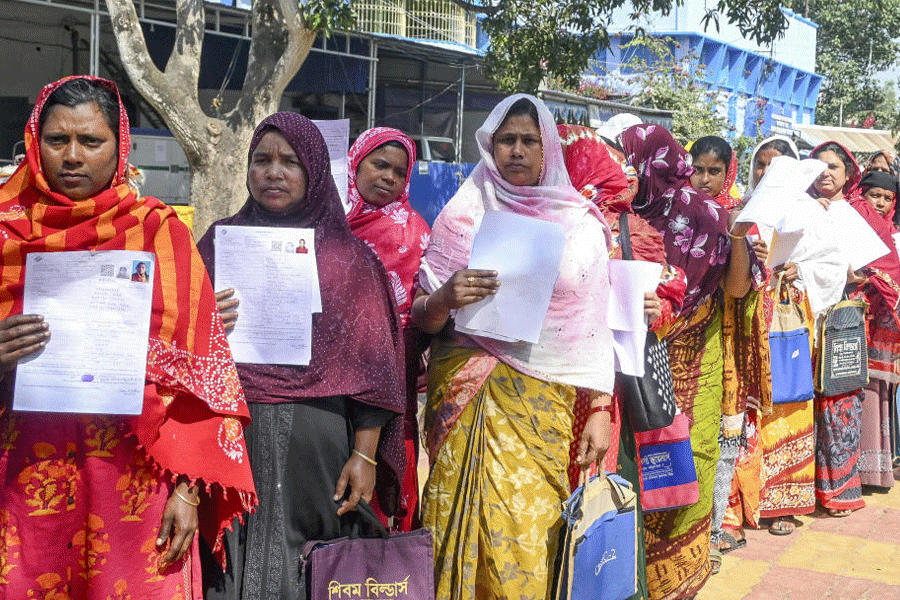
A fresh political debate has erupted in West Bengal after reports indicated that nearly 7 lakh voter names have been deleted from the state’s electoral rolls, while around 60 lakh entries remain under adjudication following the Special Intensive Revision (SIR) process.
The development has drawn attention from political parties, civil society groups, and election observers, raising questions about transparency, verification standards, and voter rights ahead of upcoming elections.
What Is the SIR Process?
The Special Intensive Revision (SIR) is conducted under the supervision of the Election Commission of India to update electoral rolls periodically. The process aims to:
- Remove duplicate entries
- Delete names of deceased voters
- Correct errors in voter details
- Add newly eligible citizens
State-level implementation in West Bengal is managed by the Chief Electoral Officer, West Bengal.
7 Lakh Names Deleted: What It Means
According to official figures emerging from the revision drive:
- Approximately 7 lakh voter names were removed from the rolls.
- Deletions reportedly include duplicate entries, shifted voters, and deceased individuals.
- The verification was carried out through field-level checks by Booth Level Officers (BLOs).
Election authorities have stated that deletions follow due process and are based on verified data. However, opposition parties claim that large-scale deletions could impact electoral fairness if not handled transparently.
60 Lakh Voters Under ‘Adjudication’
In addition to deletions, around 60 lakh entries are currently under adjudication. This means:
- Their details require further verification.
- Documentation or address proof may be pending confirmation.
- Objections or claims may have been filed regarding eligibility.
Adjudication is part of the scrutiny stage where electoral officials evaluate documentation before final inclusion or deletion.
Political Reactions
The issue has triggered sharp reactions across party lines:
- Opposition parties have demanded a detailed breakdown of deletions, alleging possible targeting or administrative lapses.
- Ruling representatives have defended the process, stating that electoral roll cleansing is routine and essential for accuracy.
Election officials have reiterated that affected individuals can file claims and objections within the prescribed timeline.
What Voters Should Do
If you are a voter in West Bengal, it is important to:
- Check your name in the updated electoral roll.
- Verify polling booth and constituency details.
- Contact your Booth Level Officer if your name is missing.
- File Form 6 (for inclusion) or Form 8 (for correction) if necessary.
Ensuring your name is correctly listed protects your constitutional right to vote.
Why This Matters
Electoral rolls are the foundation of democratic participation. Large-scale deletions or pending adjudications can have significant political and social implications, especially in a politically sensitive state like West Bengal.
Transparency, timely communication, and accessible grievance redressal mechanisms are crucial to maintaining voter confidence.
Conclusion
The deletion of 7 lakh voter names and the adjudication of 60 lakh entries during the SIR exercise in West Bengal has intensified political debate. While the Election Commission maintains that the process is standard and procedural, stakeholders are closely monitoring developments.
With elections approaching, ensuring an accurate and inclusive voter list remains central to the democratic process.

Realistic Billboard Mockup PSD Design – Editable & Downloadable Template

3D Discount Numbers Illustration Premium & Modern Brand Style

Influencer Launches Adult Summer Camp for ‘Every Type of Woman in Every Stage of Life’ to Foster Offline Friendships

The Winners at the 2026 NAACP Image Awards: Celebration of Black Excellence
Realistic Billboard Mockup PSD Design – Editable & Downloadable Template

3D Gold Logo Mockup Facade Sign – Premium Branding for Storefronts
3D Discount Numbers Illustration Premium & Modern Brand Style